How long can I keep opened bottles of wine?
If a wine has been opened, it is best to drink it the same day. This is because the quality deteriorates very quickly and without making provisions, the wine should really be drunk the next day at the latest. If this does not happen, it is important to vacuum the bottle as soon as possible after pouring the wine.
How can I invest in wine?
You can invest in wine in different ways; in bottles, in shares or in a wine estate. Investing in bottles is a dangerous game. (Belgians and Dutch are currently major investors in bottles of wine. The phenomenal increases in value of the "Petruses" have prompted many to invest in wine as well). Getting in now, when prices are very high, may be too late. Besides, what bottles should you buy? And it is difficult to sell them. Only perfectly conditioned storage of original closed cases is then an option.
Investing in shares or participating in a domain is a second option. Only for this you will have to go abroad. In our Dutch and Belgian viticulture, which certainly has interesting growth opportunities, you can only invest by starting viticulture yourself.
Is investing in winemaking interesting?
Chinese can make everything we make cheaper. So investing in industrial sector is not an option. In the knowledge economy then? You don't think that out of 1.3 billion Chinese there aren't a few million intelligent guys walking around. In viticulture then? Asians are drinking more and more wine, but they hardly have areas with the right climate to engage in large-scale viticulture. On top of that, they don't buy "cheap wines. The more exclusive the better. Professional investors know this. In addition, our regions have the potential to become wine growing regions. Perhaps some serious thinking is called for. Don't be afraid to be taken for a fool.
Climate
Despite many winemakers proving that our climate is good enough for wine growing, many people still doubt it. Lee Hannah's 2013 study shows that the future looks even better. "Study shows Global warming will make it difficult to raise grapes in traditional wine country, but will shift production to other regions." (Lee Hannah)
Is there even a market for so much Dutch and Belgian wine?
Currently, almost all Dutch and Belgian wine is sold domestically. There are those who doubt whether there is sufficient demand in our country for large-scale winemaking.
Currently there is not even enough wine for domestic demand. Export markets are not yet cultivated at all. France and Germany write in praise of our wines, but they cannot import them. There is just far too little.
Dreaming of a wine domaine
The first question to ask is: is the plot suitable for (quality) viticulture? It still happens that people sit down at breakfast looking through the window and then say, "wouldn't that be nice, to have a vineyard there?" Of course it would be nice. A winery, own wine, everyone already starts dreaming about bottles and labels. But then one usually comes to reality pretty quickly and asks himself the question of whether it is possible, and how to get started. Before delving into how, you will first have to investigate whether it is possible.
Source : https://www.geurtvanrennes.com
How do I make sure I build up a good wine stock?
Patience is the secret to building a balanced wine cellar. After all, you need to know how to find an ideal mix between your Champagnes and sparkling wines, your white, red and rosé wines, your sweet wines and fortified sweet wines. And as if that were not enough, you also have the young and older wines and the so many different grape varieties, countries and regions.
By the way, if you’re a beginner wine enthusiast, don’t go rushing out to fill your cellar with the wines you love so much. Be patient, because you’ll find that as your tasting experience grows, your taste profile will change. It wouldn’t be the first time you’ve realized that a wine you used to love so much suddenly doesn’t appeal to you at all anymore.
If you’re an experienced wine enthusiast, you can build your wine cellar to your heart’s content. After all, you’ve developed your own taste and can let that guide you seamlessly. You’ll also have a broader selection at your disposal. This means you can mix and match to your heart’s content with the grape varieties, wine styles, and countries (regions) that you prefer.
What you need to watch out for, however, is having a balance between wines that are immediately drinkable and those that need years of aging. This is very difficult to achieve immediately and often requires years of patience. Therefore, be wary of your buying frenzy to fill all those holes in your cellar anyway. Before you even realize it yourself, many bottles have decayed into just wine vinegar.
The following overview provides some general guidelines. A good mix of these will help you build a balanced wine cellar. We hereby divide wines into 5 categories:
Category 1
Wines that should be drunk young. Their greatest quality is freshness and they do not get better with age. Drink them as early as a few months after purchase.
Examples: Especially white table wines, most rosé wines, most sparkling wines and nouveau wines such as Beaujolais nouveau...
Category 2
Wines that are ready to drink when they are 1-3 years old. These wines need a short period in bottle to settle, develop their aroma, acidity or tannin to soften.
Examples: Sancerre, Pouilly fumé, Chablis, the ordinary Alsatian wines, white Bordeaux, Chardonnay and Sauvignon from the new world, simple Champagnes, most simple red wines such as Beaujolais, Côte du Rhône, simple Bordeaux and Bourgognes, Languedocs, among others...
Category 3
Wines that are ready to drink when they are 3-5 years old. These wines become more subtle with aging in bottle.
Examples: Good Bourgognes, Graves, Sauternes, Champagne, Alsace Grand Cru and very good Chardonnay from the new world. Most Bordeaux such as Médoc, Saint-Emilion, Fronsac. Crianza's or even already Riserva's. Shiraz from the new world....
Category 4
Wines that are ready to drink when they are 5-8 years old. Classic wines that need to age in bottle to show their true nature.
Examples: The best Bourgognes, Graves, Sauternes and Champagnes. The better Chenin Blanc from the Loire. Good wines from the northern Rhone and Châteauneuf-Du-Pâpe, most classified Bordeaux. Good Barolo, good Rioja, the best Australian Shiraz....
Category 5
Wines that peak after 8 years: These are the greatest wines from the best harvests.
A good tip: This overview is classically structured. In recent years, the style of winemaking has adapted to the needs of today's drinker. More and more, wines are already accessible at a young age and already allow themselves to be tasted in their youth. Therefore, you don't have to wait years to enjoy a good bottle anyway.
Source : https://zweerink.nl
What is the best place to store wines?
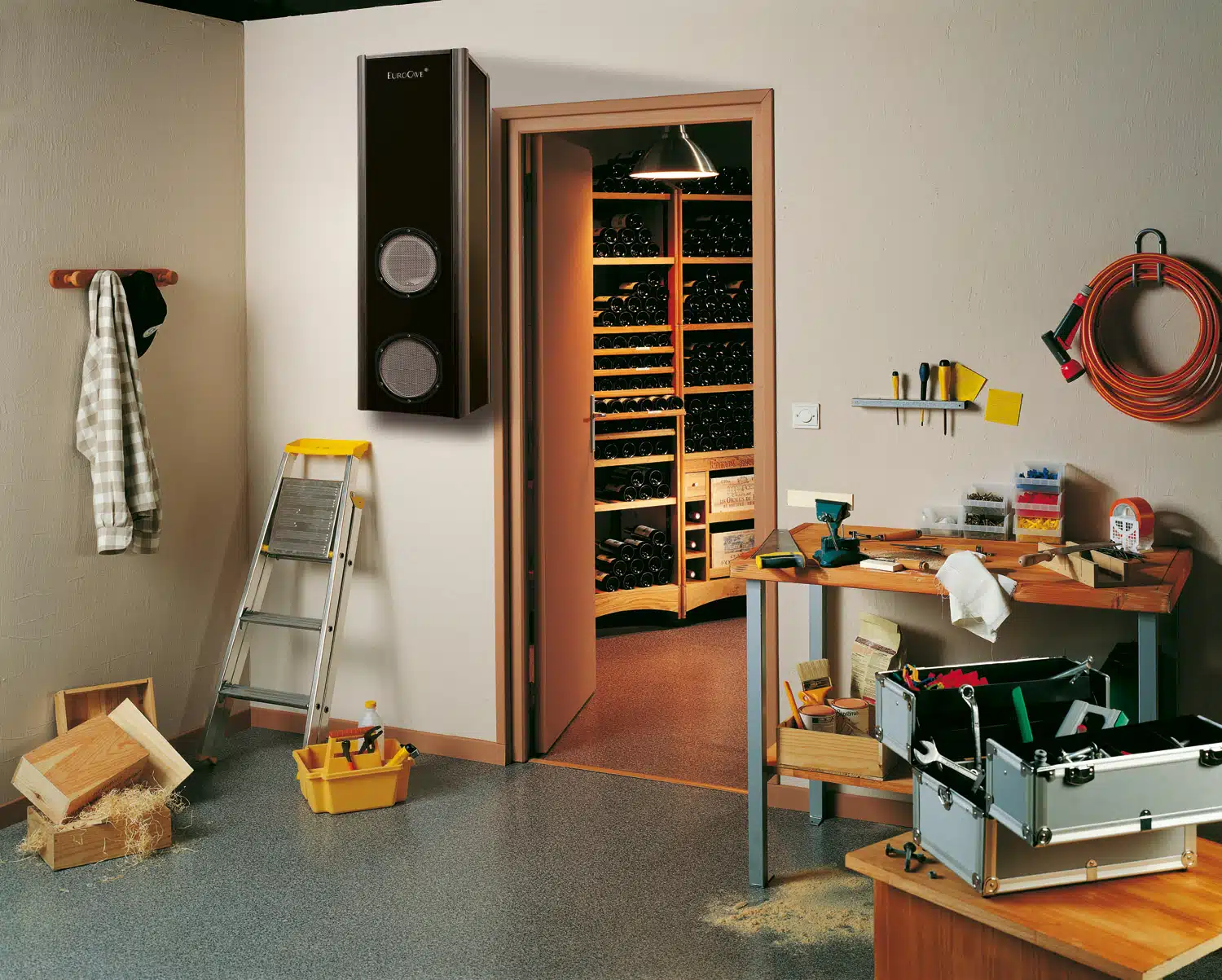
A good wine storage facility meets the following criteria: a constant temperature between 10 and 14° C, preferably at 12° C. A high relative humidity between 60 and 75%. The room must have natural air circulation. The bottles must be kept lying down in the dark. There should be no vibrations and the room should be free of odors. In order of best place to store wines, we mention: a wine cabinet (from EuroCave), a natural cellar, the coolest place in the house e.g. cellar cupboard, crawl space, hallway, bedroom, ... Always make sure the above facets are met.
What is the best way to store my wine?
Your wine should preferably be stored between 10 and 14° C, with humidity between 60 and 75%, dark, free of vibrations and odors and the bottle should be stored lying down.
At what temperature should I store my wine?
All wines are kept at the same temperature, just think of the ideal French wine cellar, where the whole cellar is kept at the same temperature, which in winter is around 10° C and in summer slowly rises to 14° C. If we can control it ourselves, as in a wine cabinet, we choose 12° C as the most ideal storage temperature for wine.
What happens if I store my wine too cold?
Wine that is kept too cold (below 10° C) does not develop. This is not a problem for drinking wines (wines that will be drunk within a year), but it is for wines that need to age. Some white wines may even develop tartaric acid deposits at low temperatures, giving the wine less freshness, but otherwise no harm. At low temperatures, wines will also not develop as well.
What happens if I store my wine too warm?
In wines that are kept too warm (above 14° C), development is too rapid. The wines are at their peak earlier, but have not been able to fully develop. The period that the wine is ready to drink is also significantly shortened.
How long can I store my wine?
How long a wine can be kept depends entirely on the type of wine. 90% of all wines produced in the world are wines that are not made to age in the bottle and should be drunk within 1 to 3 years. If you do have a storage wine, then there are also many factors that determine how long a wine can be kept.
What is the right humidity for storing wine?
The ideal relative humidity for storing wine is between 60 and 75%. The higher the better, until the moisture starts to affect the labels, which is not so much bad for the wine, but mainly for the recognition of the wine bottle. Definitely do not let the humidity go below 50%, then the cork dries out and air can get to the wine and it will oxidize.
What happens to my wine if the humidity is too high?
The ideal relative humidity for storing wine is between 60 and 75%. The higher the better, until the moisture starts to affect the labels, which is not so much bad for the wine, but mainly for the recognition of the wine bottle.
What happens to my wine if the humidity is too low?
The ideal relative humidity for storing wine is between 60 and 75%. Be sure not to let the humidity drop below 50%, as this will dry out the cork and allow air to reach the wine and cause it to oxidize.
Why can't wine withstand vibration?
Wine must age in peace and cannot withstand continuous vibration. Shaking or vibrating accelerates chemical processes, causing the wine to age and deteriorate in quality. A real wine cellar won't have these vibrations (or you must have it right next to a busy road), but so with a wine cabinet, always make sure there is shock absorption between the compressor and the wine cabinet itself.
Why is good air circulation important for my wine?
Proper air circulation in your wine cellar or wine cabinet is important for proper distribution of temperature, to ensure that the cellar or wine cabinet does not become musty smelling and to prevent mold growth.
What "odors" should I not keep with my wine?
Wine should be kept free of odors. Why? Because the cork is porous and the wine breathes through the cork. So odors can get to the wine because of this and adversely affect the taste of the wine. So which products are better not to store with the wine: potatoes, all onion-like products, paint and paint cleaners, gasoline, etc. So pay attention to that when storing in a natural wine cellar. If you store wine in a wine cabinet, often a carbon filter ensures that the air is purified before it enters the cabinet. It goes without saying not to store anything in the wine cabinet that gives off an odor.
Why are UV rays bad for wine storage?
UV rays affect the molecular structure in the wine and will discolor the wine. Therefore, it is better to store wine in the dark. That does not mean you cannot choose a glass door for a wine cabinet, but make sure the doors are treated to block 100% of the UV rays.
Why is light bad for wine storage?
Light, namely the UV rays in light, affects the molecular structure in the wine and will discolor the wine. Therefore, it is better to keep wine in the dark. That does not mean you cannot choose a glass door for a wine cabinet, but make sure the doors are treated to block 100% of the UV rays.
How and how long can I store my (opened bottle) of Sherry?
Actually not so much different from other wines, we have an overview of the main points
- Once bottled, wine is ready for consumption
- Store your bottles of Sherry in a quiet, dark place free from extreme temperature changes or vibrations
- Store your bottles vertically to minimize surface area that can oxidize
- Once opened, make sure the cork is properly on the bottle and in the case of Finos and Manzanillas: always store upright, cool
- To fully appreciate Sherry for its quality, it is important to consume the wine within a certain time. This time depends on the type of style of sherry.
As an indication for the storage of closed and opened bottles of Sherry, we can mention the periods below, provided that the bottles are carefully transported and stored without major temperature fluctuations:
- Fino and Manzanilla
- Unopened bottle: up to 1 year
- Opened bottle: up to 1 week, provided it is tightly sealed and stored in a cool place
- Other Sherries
- Unopened bottle: up to 3 years
- Opened bottle: up to 2 months, provided it is tightly sealed and stored in a cool place
- Vos en Vors
- An unopened bottle can be stored indefinitely
- An opened bottle can be stored for up to 3 months, provided it is tightly sealed and kept cool
How and how long can I store my (opened bottle of) Port?
By no means all Port is suitable for storage, in fact it is only a small part of the total supply in Port. The Port that you can store, you sometimes have to store for a long time to enjoy its optimal taste. The "house, garden and kitchen" Port, which you buy at the supermarket, has no storage potential. Think of standard Ruby's, simple Tawny's, rose Port and white Port. This Port is suitable for drinking now and the quality will only decrease with prolonged storage.
You can keep a Late Bottled Vintage Port and an old Tawny Port (also Colheita) and they do get better in some cases, but sometimes not. Both of these Port types are suitable for drinking now and have optimal flavor. You can keep them for a while, but the quality sometimes gets a little better and sometimes not. There is no clear pattern for this.
Young Vintage Port should really be left for years before drinking. Drinking young is possible, but then you miss the potential of a nice Vintage Port. After a few years the Vintage Port even "locks up" for a period, then this Port gives off little flavor. A Vintage Port from lesser years should be aged at least 10 years and from good years at least 20 years. Only then will this Port give you the optimal flavors. In some cases a Vintage Port lies for more than 50 years, it can then still be very tasty.
How do you store Port?
There are several ways to properly store Port. The easiest is a cellar, as it meets the conditions. The conditions for storage are:
- An almost constant temperature between 10 and 15 degrees
- A moist room, otherwise the cork will dry out
- Vibration-free room
- Dark Room.
Since a good wine cellar meets these conditions, it is the ideal way to store Port. Unfortunately, far from everyone has a cellar, fortunately there are alternatives in the form of a wine cabinet.
An indication on your opened bottles of Port to keep:
- White Port (fresh, fruity) for 8 to 10 days
- White Port (with wood aging) for 15 to 20 days
- White Port with age indication (10, 20, 30, +40 years) for 1 to 4 months
- Ruby / Ruby Reserve for 9 to 10 days
- Tawny / Tawny Reserve for 3 to 4 weeks
- Tawny with age indication (10, 20, 30, +40 years) for 1 to 4 months
- Colheita Port for 1 to 4 months
- Crusted Port for 4 to 5 days
- LBV Port for 4 to 5 days
- Vintage Port for 1 to 2 days
Source : https://www.vinhodoporto.nl
What should a good wine cabinet meet?
The best wine cabinet for storing wine, is a wine cabinet in which the temperature both top and bottom, back and front is equal to the set value (e.g. 12° C), with a deviation of no more than 0.1° C. This is determined, among other things, by the thickness of the insulation, by using aluminum inner walls for good conduction and natural air circulation in the wine cabinet.
The wine cabinet should have a hot and a cold circuit, so that when the ambient temperature varies, the temperature inside the wine cabinet remains constant (for example, at an ambient temperature of 0 to 35° C). In the best storage cabinet for your wine, the humidity is not lower than 50%, but preferably between 60 and 75%. The interplay of natural air circulation with air from outside the wine cabinet, condensation on the back wall and the drainage of excess water ensures this.
Vibrations are disastrous for your wine, therefore it is important that the compressor is suspended independently of the wine cabinet with, for example, silence blocks. Wine should be stored in the dark, but if a solid door does not invite you to put the wine cabinet in a prominent place in the house, make sure the glass door is treated to block 100% of UV rays. If the wine cabinet meets the above characteristics, then you have the best wine cabinet.
How do I arrange my wine bottles in my wine cabinet?
Nothing is more frustrating for a wine enthusiast than a disorganized wine cabinet. That’s why it’s important to choose the layout carefully. First, determine which part of your wine collection is suitable for stacking and which bottles you’d prefer to store in a single layer, ideally on a shelf that slides out, since most wine cabinets have a double-depth design with rows in the front and back. For larger quantities, you can opt for storage shelves. You can stack up to 80 bottles on these shelves. This is only possible if the shelf is equipped with a special profile that holds the bottles securely in place.
For all "singles" the sliding shelf is ideal: 12 different bottles on 1 shelf and you can see at a glance what's inside by sliding it outside the cabinet (of course on roller bearings, otherwise the wine vibrates too much).
At what temperature should I serve my red wine?
Wine often warms up quickly depending on the thickness of the glass, the temperature of the environment and the way it is held. You can serve a red wine with a lot of tannin warmer than a red wine with little tannin. In general, it is better to serve wine slightly too cold than slightly too warm.
- Fresh, fruity, light and smooth wines are best served between 14 and 16° C.
- Full-bodied, spicy, fairly complex wines are best served between 16 and 18° C
- Powerful, concentrated, robust wines are also best served between 16 and 18° C
- And that includes luscious, sweet red wines; between 16 and 18° C
At what temperature should I serve my white wine?
Wine often warms up quickly depending on the thickness of the glass, the temperature of the environment and the way it is held. The more refined the white wine the higher the serving temperature may be. Too cold increases the acidity of white wine.
- Fruity, fresh, semi-dry white wines are best served between 7 and 9° C
- Sparkling wines are best served between 8 and 10° C.
- Fresh, light, fruity, dry white wines are best served between 8 and 10° C
- Rose wines are best served between 8 and 10° C.
- Luscious, sweet white wines are best served between 10 and 12° C
- Full-bodied, aromatic, dry white wines are also best served between 10 and 12° C
- Very full-bodied, complex, dry white wines are best served between at 12° C
At what temperature should I serve my Champagne?
Your Champagne is best served between 8 and 10° C.
At what temperature should I serve my Port and Sherry?
Both Port and Sherry depend on the variety, here is an overview with the serving temperature of Port:
- Rose Port is best served between at 4° C
- White Port is best served between 6 and 10° C (the drier, the cooler)
- Ruby style Port is best served between 12 and 16° C
- Tawny style Port is best served between 10 and 14° C
- Vintage Port is best served at 12° C
And regarding Sherry; with the exception of Finos and Manzanillas, there is no set rule about serving temperatures, as it depends mainly on what you pair the Sherry with in terms of food, but there are general recommendations:
- Finos and Manzanillas always serve cold between 5 and 7° C
- Pale Cream is best served between 7 and 9° C.
- Other oxidative Sherries and blends serve between 12 and 14° C
- Vos and Vors serves at about 15° C
What preparations should I make for wine tasting?
Are you going to wine tasting? Then we suggest the following preparations to be optimally prepared, start there about 2 days in advance:
- not eating garlic and peppers
- No/little use of toothpaste, shampoo and soap
- do not use perfume or aftershave
Right before and during tasting:
- use the same glasses. This is because the aroma and taste are influenced by the shape, volume and size of the opening of the glass. This makes comparison otherwise very difficult
- wash the glasses with warm water, without detergent
- Dry the glasses with a cloth that has been washed without detergent, fabric softener, etc.
- holding the glass as far away from the opening as possible (to avoid influencing odors coming from the hand)
- Ensuring good wine temperature, see serving temperature chart
- order from dry to sweet
- pouring the wine with a jet (not clockwise) to prevent the introduction of oxygen
- keeping the nose above, but outside the glass
- Smell and describe in a set order (in which you also perceive the aromas: blossom, green fruit, red fruit, herbs, spices, roasted, wood, animal and food)
- Use a standard assessment form
- Regular tasting: keep practicing and smell everything around you
Source: Brabant Wine Brewers
What happens when wine oxidizes?
When wine comes into contact with oxygen, the oxidation process begins. The oxygen from the air binds with carbon chains in the wine, changing it. Wine contains sulfite, which protects the wine from oxidation, however, with strong aeration, the oxygen binds to the sulfite present in the wine. When all the sulfite is consumed, the oxygen will further oxidize the wine, producing first volatile acid and later acetic acid. Also, the polyphenols structure in the wine changes and the taste, aroma and color begins to change.
In analyses, the absence of free sulfite and the formation of volatile acid show oxidation. Especially with young wines, in principle the aroma structure can be positively influenced under the influence of oxygen, (precursors) of aromas then develop favorably so that more aroma is obtained. With older wines and in all cases with prolonged aeration, aroma development is negative, the wine oxidizes.
What is an oxidized wine?
The cause of oxidation is very simple: air. Wine that comes into too much contact with air in the fermentation tank, barrel or bottle will oxidize. This oxidation can happen quickly, if the wine is suddenly exposed to a large dose of oxygen. But also very gradually, if the wine spends a long time in a bottle where the oxygen slowly penetrates through the pores of the cork.
Oxidation translates into a dull appearance of the wine, and a flattening of aroma and taste. Until nothing is left but sour juice, say: vinegar. This is why you must keep a close eye on old wines: they are all heading for oxidation, so it is important to drink them in time.
Oxidation can already start when wine grapes are picked: air also corrodes fresh fruit. Take one half of an apple that you have cut in half: the flesh shines, smells fresh, is crisp in texture and lively in flavor. But leave one half for several hours: the apple turns brown and mealy and loses all its fragrance and flavor. That half is oxidized. You can imagine what it means for the wine if oxidized grapes end up in the fermentation vat. Hence, a good winemaker makes sure that the wine grapes are not damaged on their journey from the vineyard to the winery.
But oxidation remains a danger even during winemaking. That is why the winemaker makes sure that the fermentation vessel and the wooden barrel do not allow too much air to pass through at once. And he adds to the wine an agent that prevents oxidation: sulfite.
Even the wine buyer must still take into account that his wine can oxidize, for example if the cork does not seal the bottle neck properly, or if he leaves the wine too long in his cellar. Or also if an old fragile wine, which has already received a lot of oxygen in its life, is suddenly decanted into a decanter.
Now the curious thing is: oxygen is necessary for wine at the same time. But only to a limited extent. Indeed, wine with a lack of oxygen starts to suffer from the opposite of oxidation: reduction. Typified by bad odors from a sewer or farmyard. Hence, the winemaker makes sure that the wine has dosed contact with oxygen, for example, through the pores of the wooden barrel. Exactly that metered contact will strengthen the wine to resist oxidation later, as if it had been "vaccinated" by oxygen. Equally important is that oxygen penetrates into the bottle through the pores of the cork: only in this way can a wine age, evolve, become softer and more supple, and develop the desired aromas of "old" wine.
Oxygen is a knife that cuts both ways: in too large or sudden a dose, it can be disastrous for wine, but in a controlled dose, it is just right for it.
Source: winecave.com
What does a full wine bottle weigh?
This depends very much on the wine bottle itself. Tests show that an empty bottle of wine weighs between 306 and 645 grams. For the sake of convenience, we'll take an average of 475 grams. Together with the contents, a full bottle of wine weighs about 1225 grams.
By what do you recognize good champagne?
You can recognize a good champagne by the many little bubbles that rise quickly in the glass and continue to bead. To a creamy texture, fraîcheur and finesse. To a nice balance between sweet, sour and bitter and nicely integrated carbon dioxide.
Are there cheaper alternatives to champagne?
Of course. Crémant in France, Cava in Spain, Sekt in Germany and Spumante in Italy are also made using the same method and (sometimes) the same grapes as in champagne. Because they are not legally allowed to use the designations "Champagne" and "Méthode Champenoise," they are usually cheaper.
Which champagnes offer the best price to quality ratio?
Drappier, Philippe Gonet, J. Lassalle, Esterlin, J. de Telmont, Belin, Lenoble, Tarlant, Diebolt-Vallois, Larmandier-Bernier and Pierre Gimonnet are cheaper than the well-known branded champagnes, but at least as good.
In which glasses do you pour champagne?
A coupe is out of the question (although it seems to be back in fashion). A flute glass is out of date. A plain wine glass is the new trend. Although there are now champagne glasses, between a flute and a wine glass. And in trendy wine bars, the coupe is now a hype again.
Can you drink champagne a day later?
Sometimes it does, but the pearling effect is largely gone. The trick with the silver spoon is superstition. There are also special sealing caps for champagne. The best remains: drink the bottle empty the day itself.
How do you store wine glasses in the cabinet?
Best not upside down: they will start to smell musty. Upright, then, although you should wipe them down with a clean cloth beforehand.
What should you do if the cork breaks?
Don't panic. Remove the broken piece and make a second attempt in what remains: turn in very carefully, otherwise you will push the cork into the bottle. If that happens: quickly transfer into a decanter.
What should you do if cork particles have fallen into the wine?
Just fish them out of the glass, there is nothing wrong. If they are a lot of tiny particles, you can strain the wine (preferably with a plastic sieve).
How do you know if a wine is corked?
The musty smell usually makes it obvious. If you're not sure, you can taste. If you're still not sure, ask a tablemate. Or to your wife: she may smell better.
How much wine should you pour?
Too little can indicate stinginess, too much can indicate a lack of class. In most glasses, it is best to stop pouring at the point where the glass is widest.
How do you hold a wine glass?
By the stem or foot, but definitely not by the glass itself. You may roll the wine, but you don't have to. It does release the aromas better.
What if you don't have red wine at room temperature?
Then pour the red wine into the glass as quickly as possible, there it will "warm up" faster. Keeping the hands around the glass can also help.
Should you straighten a red wine a day in advance?
You only need to do this with wines of respectable age; the sediment then has time to sink to the bottom.
Should you uncork a red wine beforehand to give it air?
It can be done, but the wine mainly gets air in the glass or in a decanter. But note that young wines you pour over into a decanter to quickly oxygenate it, making it smoother. That's what decanting has. With old wines, it can be useful to decant it: pour carefully through a strainer or stop pouring before the sediment reaches the neck of the bottle. Decanting with old wines is strongly discouraged.