What is a cigar?
A cigar is an enjoyment device for smokers, usually manufactured from a mixture of tobacco varieties originating from countries such as Brazil, Cuba, Dominican Republic, Honduras, Nicaragua, Java and Sumatra. Cigar is derived from the Spanish for twist: "girar." Another reading is that it is said to be a Mayan word, namely sikar.
Cigar vs. cigarette
There are differences between cigar and cigarette smoking, in that a cigar takes much longer to smoke (usually they last at least three quarters of an hour), but also that cigar smoke is not meant to be inhaled. So whereas cigarettes are primarily harmful to the lungs, cigars act on the throat. In addition, a cigar in general does not serve so much to satisfy nicotine cravings - although this undoubtedly plays a role - but its purpose is to secrete a specific taste in the mouth, distinguishing different cigars from each other in a more pronounced way than cigarettes. Another major difference is the temperature of a cigar, which is considerably higher than a cigarette.
Short Filler
Cigars can be distinguished into two types: Long Fillers and Short Fillers (and a small part Medium Fillers). Almost all types are made up of the inner filler, binder and cover sheet. The interior of a Long Filler consists of rolled tobacco leaves from which the main grain has been removed (so-called frog-legs), as opposed to Short Fillers: the interior of these cigars consists of short pieces (cut up) of tobacco, mostly from different regions.
Long Fillers must be stored properly (in a so-called cigar humidor) at a humidity level between 68% and 72%. Temperature is less important. If the humidity drops below 60%, the Long Filler becomes dry, breaks easily, burns too quickly, and has a harsh taste. At humidity levels above 72%, the cigar burns more slowly, but the flavor is richer. At humidity levels above 80%, mold begins to form on the cigars (not to be confused with bloom).
Short Fillers are usually made in countries where tobacco is not grown, but merely transshipped (at the port). Think of brands like Ritmeester, Hajenius, Elephant, and the like Exceptions to this are cigars from Brazil and Indonesia, for example (this is where the tobacco is grown and the cigar is produced). Short Fillers should not be kept moist (although it is often claimed otherwise), often do not need to be cut and have a different taste than Long-Fillers. A short-filler is best served by a humidity of about 65%.
A Short Filler exists in different sizes.
- The cigarillo or sprite is a narrow, thin cigar. Some cigarillos have a filter.
- The señorita is the best known and most frequently smoked model in the Netherlands. Usually a length of about ten centimeters, and one centimeter thick.
- The Wild Cigarro, a well-known format cigar. This cigar used to be named after the tobacco it contains, namely Wild Havanna. Nowadays, however, this name may no longer be used. The cigar can be recognized by its medium size and the floss at the end. The first to enter the Dutch market with this type was the Hudson brand from Roosendaal. Smoking time approximately twenty-five minutes.
- The panatella is generally slightly longer than a señorita but is between a cigarillo and a señorita in terms of thickness.
- The corona is often smoked in the evening, after dinner. A bit longer and thicker than a señorita, with a smoke lasting from just under an hour to more than two hours.
- The petit or half corona this is slightly shorter than the normal corona.
- The spoutknak is a cigar whose end tapers to a thin tip. A beginner's mistake when smoking the tuitknak is taking the narrow part into the mouth and lighting the actual mouthpiece. Since a good cigar is glued only at the mouthpiece, a tuitknak falls apart quickly in this case.
- The bolknak was based on the spoutknak and was first made by Ritmeester. The bolknak is a tapered model.
There are also a number of slightly less common formats.
Designer cigars
A luxurious appearance are designer cigars. These are long-filler cigars, distinguished externally by a motif. Here the edge of the cover sheet is often dipped in a different color of tobacco powder, creating a design edge. This motif is applied using (tobacco) powder. There are several methods:
- Matting (tobacco) powder on the cover sheet.
- Dip the edge of the cover sheet in (tobacco) powder.
History
Tobacco (Lat. Nicotiana tabacum) is known to have been used as a smoking material in the New World long before the arrival of Columbus. In particular, the Maya rolled tobacco leaves in a form that allowed them to light and smoke the tobacco. This can be characterized as a precursor to the cigar. The Cuban Indians called this a cohiba, now a very expensive brand. Today in Cuba, people speak of tabacos when referring to a cigar.
During the colonial period, an important tobacco trade developed between the Caribbean and Europe. The Spanish began planting tobacco in the late 17th century and exported the tobacco leaves to the rest of the world. The United Kingdom grew tobacco in Virginia, and the tobacco industry flourished during the British Empire.
In Europe, Spain was the first country to produce cigars. In 1717, the first cigar factory began in Seville. Around 1790, a cigar industry emerged in France and Germany, and not until 1820 also in England. The Netherlands and Belgium (including Geraardsbergen) followed, see Cigar Industry (Benelux). The Dutch cigar industry began in Kampen in 1826. It was then mainly cottage industry. The first real cigar factory opened in Amsterdam in 1858. Besides many other places, especially Eindhoven, Valkenswaard and Veenendaal and of course Kampen played an important role.
However, the specific cigar industry faced considerable competition from the cigarette in the 20th century, which led, on the one hand, to the fact that people began to produce cigars by machine, in order to reduce the price, and, on the other hand, the traditionally manufactured cigars became more and more exclusive (read: expensive). The first cigar machines made their appearance in 1924. However, these could not yet perform all the steps of cigar making.
Most cigars are currently produced in the United States. The Netherlands is the world's largest cigar exporter, with an export volume of 2 billion cigars per year (2007 data). However, most of these cigars are manufactured in Belgium.
Manufacturing process
Cigar maker at the National Exhibition of Women's Labor, The Hague 1898
The cigar consists of cut tobacco, called the inner leaf, around which the wrapper, a pre-processed tobacco leaf, is rolled. Then one has a so-called pop (Z.Ned) or bunch (N.Ned). Around this the wrapper is then wrapped, after which the cigar is complete.
The tobacco used was moistened and the inner material was rolled into the wrapper into a model called a doll. This was done in a cigar mold that consisted of twenty barges. Five filled molds (one hundred dolls) were placed in a press and dried for two hours. Then the dolls were turned a quarter turn to avoid seam formation, this was the doll turning process. When the doll was in shape, the protruding parts were cut off and reused in new inner material. The doll was now manually fitted with a cover sheet, which was a quarter or a sixth of a Sumatra tobacco leaf, which was spiraled from the firing end to the back around the doll. Since the side veins fanned out to the left and right from the main grain as seen from the top, and these should be as little visible as possible, a cigar was covered "left" and "right." Sometimes the cigar was still processed by rolling it under a block to minimize the tension differences created during manual covering. When the cigar was ready, it went to the sorting facility. There the cigars were sorted by color by special craftsmen on long tables, this was done in rooms that were supplied with daylight from the north. Then the cigars were pressed and coded, then dried in the drying room for several days. Then they were banded and packed in cases, where the top layer of cigars, the mirror, had to show a very even color.
Piece rate was the rule, and as late as about 1900, every cigar maker employed a doll maker, who had to be paid from the piece rate.
Cigar Brands
The fact that a cigar brand is named with a particular country does not mean that all the raw materials come from that region; often tobacco varieties from different countries are blended. Thus, the country of origin of a cigar actually indicates the place where the cigar was composed. By the way, the number of cigar brands ever produced is extremely large. Cigars often come with a beautiful decorative band called a cigar band. This is a popular collector's item. It is usually produced in lithographic printing. In the middle of the last century, lithography was replaced by offset printing. This technique is used to manufacture cigar rings (bands) today. In addition to printing, cigar rings are refined with bronzing and embossing (embossing) to emphasize the attractiveness of the cigar.
Argentina
Barbados
| Brand |
| Royal Barbados |
| Sam Lord |
Belgium
Brazil
| Brand |
| Alonzo Menendez |
| Brasil Autênticos |
| DaMatta |
| Dona Erô |
| Leite & Alves |
| Monte Pascoal |
| Suerdieck |
Colombia
Costa Rica
| Brand |
Remark |
| Brun del Re |
|
| Cumbres |
Produced by Tabacos de la Cordillera |
| Don Benigno |
|
| Don Ursulo |
|
| El Séptimo |
|
| Tres Hermanos |
|
| Vegas de Santiago |
|
Cuba
| Brand |
Remark |
| Bauza |
sold only in Cuba |
| Belinda |
local brand |
| Bolívar |
Multilocal brand |
| Cabañas |
local brand |
| Cifuentes |
Discontinued brand, perhaps still made, but no longer in Cuba |
| Cohiba |
global brand with a Cuban version for non-USA countries and a globally available version produced outside Cuba |
| La Corona |
Discontinued brand, perhaps still made, but no longer in Cuba |
| Cuaba |
Niche brand |
| Davidoff |
Discontinued brand, perhaps still made, but no longer in Cuba |
| Diplomáticos |
local brand |
| Don Alfredo |
Discontinued brand, perhaps still made, but no longer in Cuba |
| Don Cándido |
Discontinued brand, perhaps still made, but no longer in Cuba |
| Dunhill |
Discontinued brand, perhaps still made, but no longer in Cuba |
| La Escepción |
Discontinued brand, perhaps still made, but no longer in Cuba |
| La Flor de Caney |
Discontinued brand, perhaps still made, but no longer in Cuba |
| Flor de Cano |
local brand |
| Flor del Punto |
Discontinued brand, perhaps still made, but no longer in Cuba |
| Fonseca |
Multilocal brand |
| Gispert |
Discontinued brand, perhaps still made, but no longer in Cuba |
| La Gloria Cubana |
local brand |
| Guantanamera |
local brand |
| H. Upmann |
global brand with a Cuban version for non-USA countries and a globally available version produced outside Cuba |
| Hoyo de Monterrey |
global brand with a Cuban version for non-USA countries and a globally available version produced outside Cuba |
| José L. Piedra |
Multilocal brand |
| Juan López |
local brand |
| María Guerrero |
Discontinued brand, perhaps still made, but no longer in Cuba |
| Montecristo |
global brand with a Cuban version for non-USA countries and a globally available version produced outside Cuba |
| Partagás |
global brand with a Cuban version for non-USA countries and a globally available version produced outside Cuba |
| Por Larrañaga |
local brand |
| Punch |
Multilocal brand |
| Quai d'Orsay |
local brand |
| Quintero |
Multilocal brand |
| Rafael González |
local brand |
| Ramón Allones |
local brand |
| Reloba |
sold only in Cuba |
| El Rey del Mundo |
local brand |
| Romeo y Julieta |
global brand with a Cuban version for non-USA countries and a globally available version produced outside Cuba |
| Saint Luis Rey |
local brand |
| San Cristóbal de la Habana |
Niche brand |
| Siboney |
Discontinued brand, perhaps still made, but no longer in Cuba |
| Los Statos de Luxe |
Discontinued brand, perhaps still made, but no longer in Cuba |
| Trinidad |
Niche brand |
| Troya |
local brand |
| Vegas Robaina |
Multilocal brand |
| Vegueros |
local brand |
| La Vigía |
Discontinued brand, perhaps still made, but no longer in Cuba |
Dominican Republic
| Brand |
Remark |
| Adán y Eva |
|
| Arte Cubano |
|
| Arturo Fuente |
Produced by Tabacalera Fuente |
| Ashton |
|
| Augusto Reyes |
|
| La Aurora |
|
| Avo |
after its founder, and former jazz pianist Avo Uvezian, produced and distributed by Davidoff. |
| Balmoral Royal Selection |
|
| Bolívar |
Produced by General Cigar, a division of Swedish Match |
| Caonabo |
|
| Casa Blanca |
|
| Cohiba |
Produced by General Cigar, a division of Swedish Match |
| Cojimar |
|
| El Credito |
Produced by General Cigar, a division of Swedish Match |
| Cuban Stock |
|
| Cuesta-Rey |
Produced by J.C. Newman |
| Davidoff |
|
| Delicioso |
|
| Devil's Weed |
|
| Diamond Crown |
Produced by J.C. Newman |
| Domenico |
|
| Don Diego |
By Altadis |
| Don Ibarra |
|
| Don Sebastián |
|
| Emilio Reyes Collection |
|
| La Flor Dominicana |
|
| Fonseca Cigars |
|
| Fuente Fuente Opus X |
Produced by Tabacalera Fuente |
| La Gloria Cubana |
Produced by General Cigar, a division of Swedish Match |
| The Griffin's |
Produced by Davidoff |
| Gurkha cigars |
|
| La Habanera |
|
| Henry Clay |
|
| Homage 1492 |
|
| JM's Dominicans |
|
| Juan Clemente |
|
| Julio César |
|
| León Jiménez |
|
| Los Libertadores |
|
| Macanudo |
Produced by General Cigar, a division of Swedish Match |
| Marca Fina |
|
| Maximus by Diamond Crown |
Produced by J.C. Newman |
| Montecruz |
|
| Montesino |
Produced by Tabacalera Fuente |
| Nomi |
|
| Oliveros |
|
| Olor del Cibao Cigars |
|
| Partagas |
Produced by General Cigar, a division of Swedish Match |
| Paul Garmirian |
|
| Perdomo |
|
| Primo del Rey |
|
| Private Stock |
|
| Quesada Cigars |
|
| Rocky Patel |
|
| Royal Jamaican |
Produced by Altadis |
| Sosa |
Produced by Tabacalera Fuente |
| Tatiana |
|
| Toppers |
|
| La Unica |
Produced by J.C. Newman |
| Vegafina |
Produced by Altadis |
Germany
Ecuador
Philippines
| Brand |
| 1881 |
| Alhambra |
| Antonio Giménez |
| Don Juan Urquijo |
| Flor de Filipinas |
| La Flor de la Isabela |
| Independencia 1898 |
| La Nobleza Manila |
| Tabacalera |
| Tabaquería de Filipinas |
Honduras
| Brand |
| Aliados |
| Baccarat |
| Las Cabrillas |
| Camacho Cigars |
| CLA |
| Carlos Torano |
| Conuco |
| Don Tomás |
| Encanto |
| Excalibur |
| Flor de Copán |
| Flor de María Mancini |
| Flor de Selva |
| Hoyo de Monterrey |
| Indian Tabac |
| Punch |
| Puros Indios |
| El Rey del Mundo |
| Sancho Panza |
| Villa Zamorano |
| Zino |
Hungary
Indonesia
| Brand |
| Java Royale |
| Luna Perfecta |
| Srintil |
| Tambo |
Iran
| Brand |
Remark |
| 57 |
|
| Bahman |
|
| Farvardin |
|
| Homa 20 |
|
| Oshno |
|
| Tir |
|
| Zar |
By Davidoff Classic |
Italy
| Brand |
| José Bartolo |
| Toscano |
Mexico
| Brand |
| A. Turrent |
| Aromas de San Andrés |
| Chicos |
| Del Paraíso |
| Don Chicho |
| Ejecutivos |
| Hacienda de Veracruz |
| Hoja de Mexicali |
| Hoja de Oro |
| Hoyo de Casa |
| Irene |
| Matacan |
| Miranda |
| Mito de San Andrés |
| Santa Clara 1830 |
| Te-Amo |
| Valdez |
| Veracruz |
Netherlands
| Brand |
| Agio |
| Balmoral |
| Cafe Creme |
| Compaenen |
| Elisabeth Bass |
| Hajenius |
| Henri Wintermans |
| Gentlemen of Ruysdael |
| The Hertogh |
| Hofnar |
| The Huifkar |
| Justus van Maurik |
| Charles 1 |
| Connoisseur's Choice |
| The Elephant |
| Old Camps |
| Panther |
| La Paz |
| Rider |
| Schimmelpenninck |
| Steel King |
| Van der Donk |
| Victor Hugo |
| William II |
Nicaragua
| Brand |
Remark |
| 420's |
|
| Ambrosia |
|
| Aristoff |
|
| La Aroma de Cuba |
|
| Bahia |
|
| Bossner Reserva Limited Ed. |
|
| Cabaiguan |
|
| Camaguey |
|
| Carlos Toraño |
|
| Casa de Nicaragua |
|
| Casa de Torres |
|
| Casa Magna Colorado |
|
| Charatan |
|
| Chinchalero |
|
| Conquistador |
|
| Cumpay |
|
| Don José |
|
| Don Kiki |
|
| Don Lino |
|
| Don Pepín García Cuban Classic |
|
| Drew Estate |
makers of ACID, Java, La Vieja Habana, Natural, Chateau Real |
| EO Premium 601 Series |
Produced by Don Pepín García for United Tobacco |
| El Fenicio |
|
| Fernández Signature Series |
|
| Fighting Cock |
|
| Flor de Jalapa |
|
| Isla del Sol |
|
| Joya de Nicaragua |
|
| Liga Privada no.9 |
|
| Man o' War |
|
| Mombacho |
|
| My Father |
|
| Oliveros King Havano |
|
| Oliva |
|
| Oro de Esteli |
|
| Old Henry |
|
| Padrón |
|
| Placencia |
|
| Quorum |
|
| La Rica |
|
| Tabacos Baez |
|
| Tatuaje |
|
| Tony Álvarez |
|
| Troya Clasico |
|
| Vegas de Tabacalera Esteli |
|
Panama
| Brand |
| Amador |
| Colón |
| Joyas de Panamá |
| Oro de Panamá |
| Pride of Panama |
Peru
| Brand |
| Miguel Grau |
| San Martín |
| Señor de Sipán |
Puerto Rico
| Brand |
| Criollitos |
| Dutch Masters |
| La Flor de Cuba |
| Las Fumas de Puerto Rico |
| Hoja Boricua |
| Puerto Rico 965 |
| La Restina |
Turkey
Venezuela
| Brand |
| Crispín Patiño |
| La Cumanesa |
United States
| Brand |
Remark |
| Avanti |
|
| Backwoods |
|
| Black and Mild |
|
| Cuban Crafters Cigars |
Miami Factory |
| Phoenix |
|
| La Flor De Gonzalaz |
Hialeah,FL |
| Habaneros By Habaneros Cigars of West Palm Beach |
|
| Havana Soul |
|
| La Herencia de Cuba |
Ybor City |
| King Edward The Seventh |
|
| Marsh Wheeling |
|
| Marty Oswald Cigars |
|
| Muriel |
|
| Nat Sherman |
|
| Padilla |
|
| La Palina |
|
| Peerless |
|
| Phillies |
|
| Plantation Reserve |
|
| El Rey de los Habanos |
|
| Sam Houston |
|
| Swisher |
|
| Taino |
|
| Travis Club |
|
| Vegas Cubanas |
|
| Vieux Carré |
|
| White Owl |
|
Sweden
| Brand |
Remark |
| After Dinner |
historic brand |
| Brazil |
historic brand |
| Femöring |
historic brand |
| Florette |
historic brand |
| Göta Lejon |
historic brand |
| Juno |
historic brand |
| Nelly |
historic brand |
| Pythia |
historic brand |
| Sabor del Pasado |
historic brand |
| Storms |
historic brand |
| Strandrove |
historic brand |
Cigar Humidor
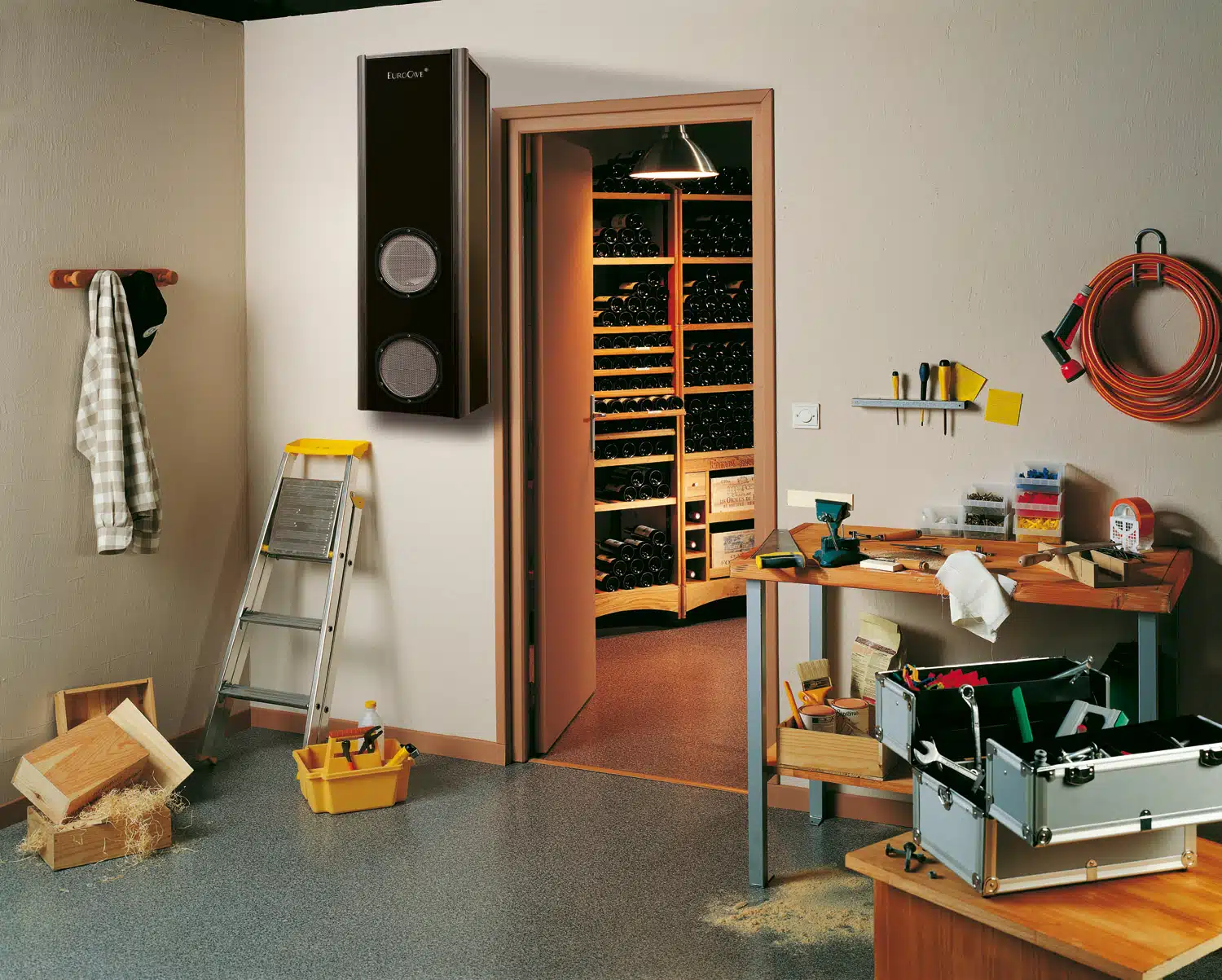
Would you like to store multiple cigars for an extended period? Then check out the EuroCave Cigar Humidor. This cigar climate cabinet creates the ideal conditions for storing cigars, such as a constant temperature of 17°C and a relative humidity of 65–70%. Of course, the cigar humidor is available with many luxury options, just as you’ve come to expect from EuroCave .